
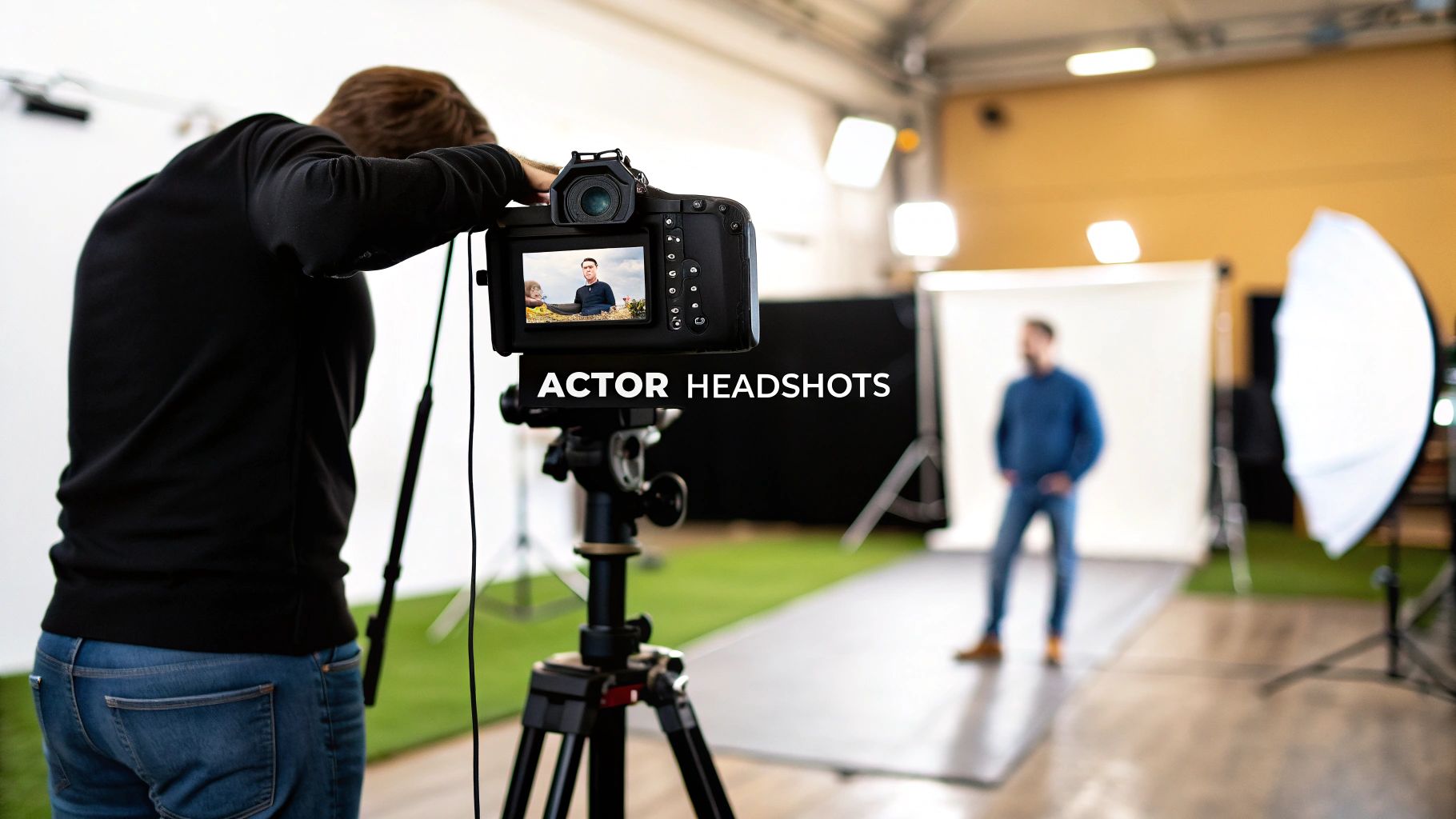
Long before you ever deliver a single line, your headshot has already spoken for you. It's time to stop thinking of professional actor headshots as just nice photos. They are your primary marketing tool—your personal brand billboard.
Your headshot is your first, and arguably most critical, audition.
Why Your Headshot Is Your First Audition
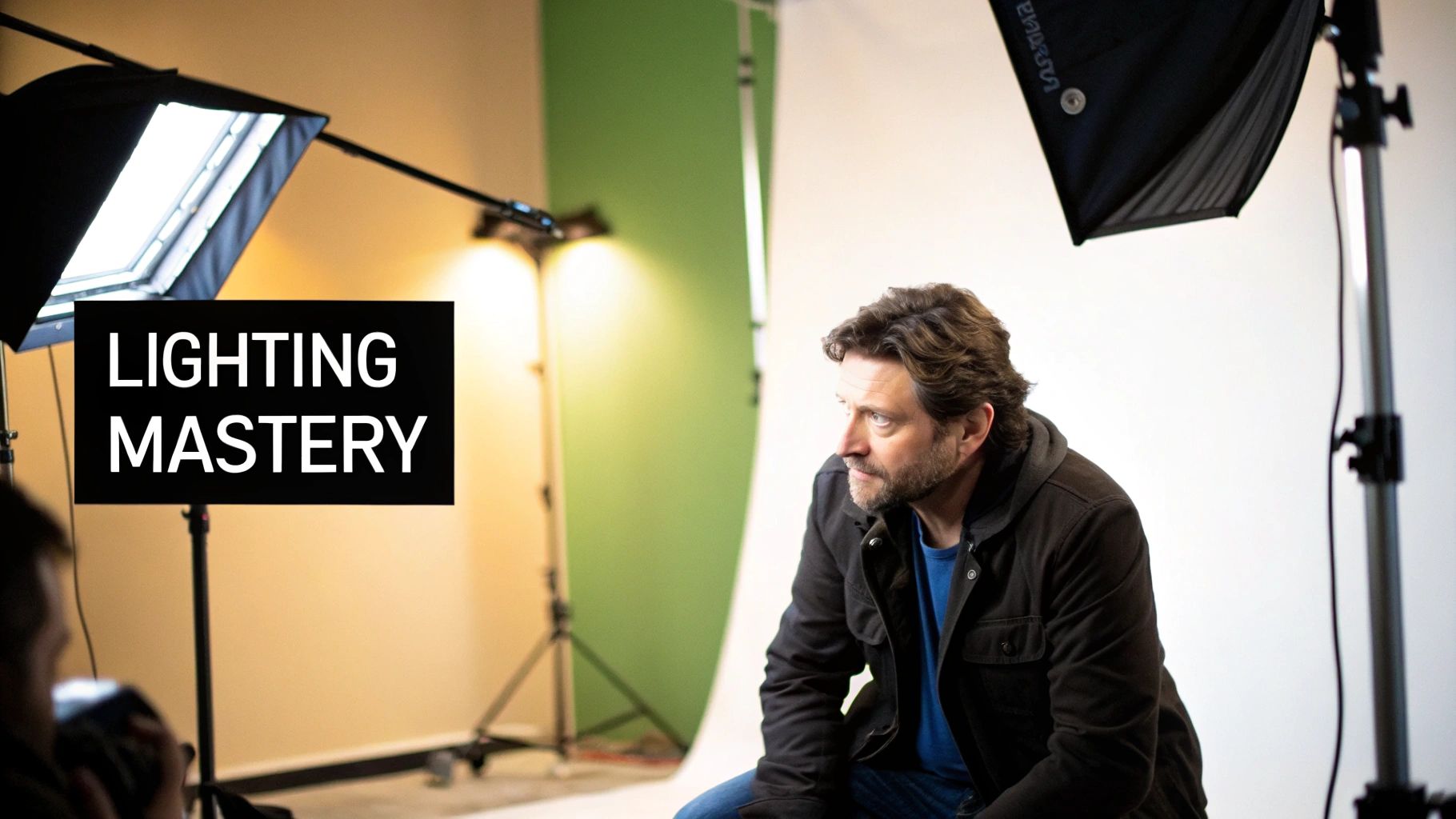
In the lightning-fast world of casting, first impressions are everything. A casting director might scroll through hundreds, if not thousands, of thumbnails in a single day. What makes them stop and click on your profile? Your headshot.
This isn't just about getting a pretty picture; it's a strategic career move. Let's dig into what makes an image so powerful that it can land you a casting call all on its own.
Your Headshot as a Brand Billboard
Imagine you're casting for a friendly, approachable sitcom dad. You’re swamped with submissions. Then you see it: a headshot of an actor with a warm, genuine smile, soft lighting, and a casual, friendly vibe. That image immediately tells you this actor gets the role.
On the other hand, a dark, moody, intense shot for that same role would be an instant pass. Your photo has to do the heavy lifting before anyone even bothers to read your resume.
A great headshot communicates crucial information at a glance:
- Your Brand: Are you the quirky best friend, the serious detective, the warm mom, or the cunning villain?
- Your Professionalism: A high-quality, well-lit photo shows you’re a pro who takes their career seriously.
- Your Range: A portfolio with distinct commercial and theatrical looks shows you have versatility.
This isn't just an industry opinion; it's backed by serious money. The global market for professional headshot photography was valued at roughly $2.5 billion in 2023 and is on track to more than double to about $5.8 billion by 2032. The demand for quality is real and growing.
Key Takeaway: Your headshot isn't about looking good. It’s about looking right for the roles you want. It must be specific, marketable, and perfectly aligned with your casting type.
What Casting Directors Really See
Here’s a secret: casting directors aren't looking for glamour shots. They’re looking for a real, authentic person who can solve their casting problem. They need to see your personality, your essence, and a clear glimpse of the characters you can believably play.
To really stand out, you have to understand what makes a compelling image from their side of the desk. To get more ideas on how to define your unique appeal, exploring effective brand positioning strategies can offer some fantastic insights.
It's common for actors to focus on what they want to see in a headshot, which can be very different from what a casting director needs to see. This disconnect can be the difference between getting called in and getting overlooked.
Common Headshot Goals vs Casting Director Needs
| Common Actor Goal | Casting Director Need | Effective Outcome |
|---|---|---|
| "I want to look my absolute best, like a model." | "I need to see what you look like on an average day." | A photo that is authentic, current, and looks like the person who will walk into the audition room. |
| "I want a dramatic, artistic shot." | "I need to see your eyes clearly and understand your brand." | An image that is well-lit, expressive, and clearly communicates a specific character type (e.g., commercial or theatrical). |
| "This one photo should show I can do everything." | "I need to know what you are best at, your most castable type." | A specific, targeted shot that says, "This is my wheelhouse," making you an easy choice for a specific role. |
| "My friend is a great photographer, they'll do it for free." | "I need to see a professional-grade image." | A high-quality photo that signals you are a serious professional who invests in your career. |
An effective headshot bridges that gap—it connects how you see yourself with what the industry needs to see to call you in. Your goal is to make their job easier.
Planning Your Perfect Headshot Session
A standout professional actor headshot is no accident. It’s born from meticulous planning long before you ever step in front of the camera. Getting this prep work right is just as crucial as your actual performance during the shoot.
The first move is finding the right creative partner. Don't just look for the cheapest photographer; find one whose portfolio is filled with actors who have a similar "type" or brand to yours. Scrutinize their style. Are they brilliant at bright, warm commercial shots, or do their theatrical images have that specific mood and depth you’re chasing? A cheap session that misses the mark is way more expensive in the long run than a well-planned investment that actually gets you auditions.
Building Your Character Brief
Once you've got a shortlist of photographers, it’s your turn to provide a crystal-clear vision. You need to build a "character type" mood board. This isn't just a random collection of photos you like—it's a visual brief for the exact roles you want to book. Here’s a quick step-by-step:
- Define Your Archetype: Write down 3-5 character types you are most castable for (e.g., "friendly young professional," "gritty anti-hero," "quirky tech genius"). Be specific.
- Gather Visuals: Use Pinterest or a simple document to collect 10-15 images for each archetype. Look for lighting, expression, wardrobe, and overall mood. Search for headshots of actors who play these roles.
- Add Notes: For each image, jot down what you like about it. Is it the subtle smirk? The soft lighting? The way the jacket collar frames the face?
- Share and Discuss: Send this mood board to your photographer a week before the shoot. This gives them time to prepare and ensures you are both working toward the same goal.
Wardrobe Choices That Tell a Story
Think of your clothing as a powerful, non-verbal tool. The goal isn’t to wear a costume but to suggest a character. It's all about archetypes. Here’s how to choose your outfits practically:
- The Approachable Friend (Commercial Look):
- Action: Select soft fabrics in solid jewel tones or pastels (blues, greens, teals work well).
- How-to: Bring 2-3 simple crewneck or V-neck t-shirts or sweaters. Ensure they are wrinkle-free and fit well—not too tight, not too baggy.
- The Authoritative Figure (Theatrical Look):
- Action: Choose structured pieces in darker, solid colors like navy, charcoal, or deep burgundy.
- How-to: Pack a well-fitting blazer, a crisp button-down shirt, or a leather jacket. Layering is key; a t-shirt under a jacket gives you more options. Avoid busy patterns and logos.
Your wardrobe should support your character, not overpower you. A casting director should notice your expression first and your clothing second. The right outfit is a subtle cue that reinforces the message you're sending.
This handy infographic breaks down how to align your background with your headshot style to complete the entire look.
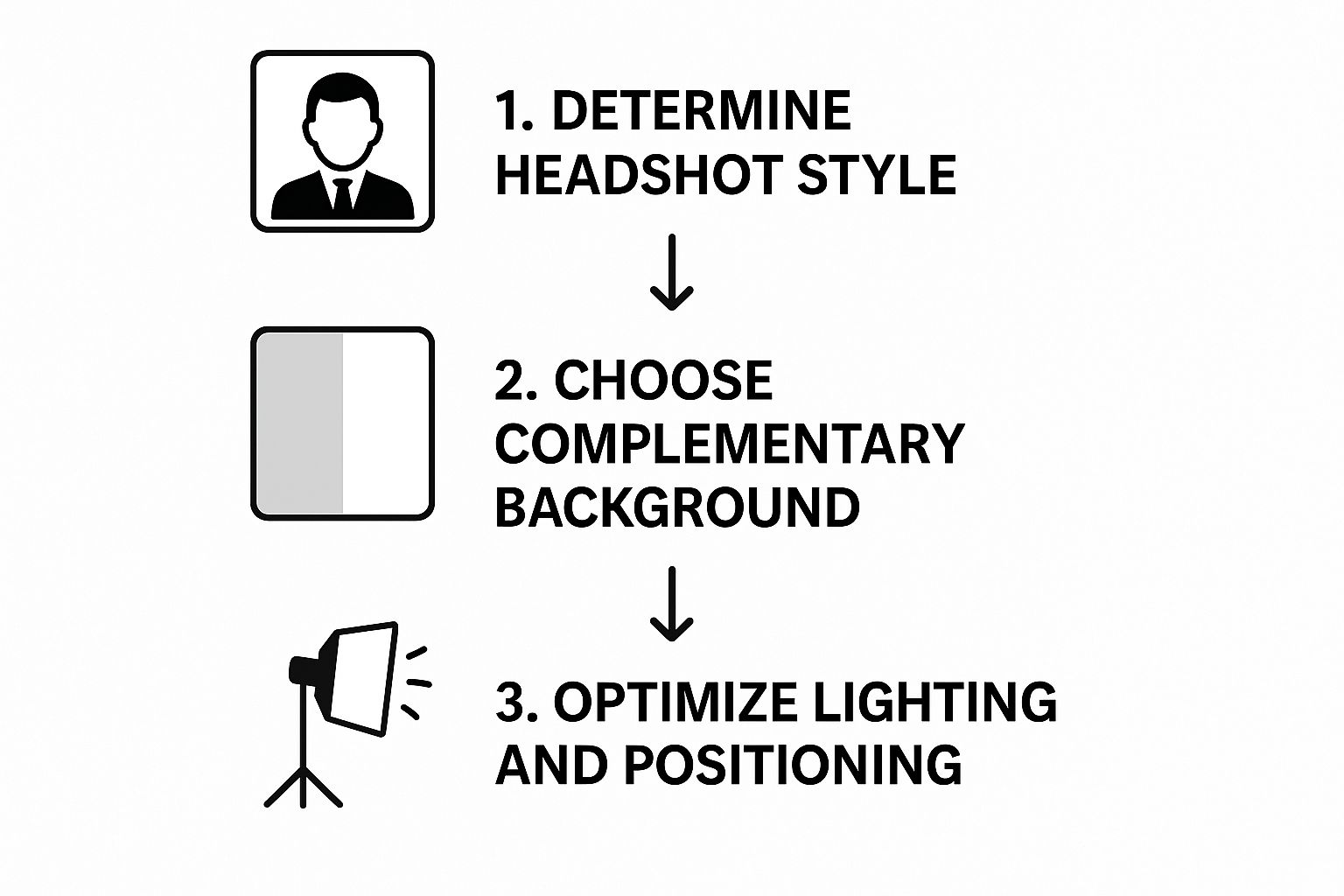
As you can see, choosing a background isn't just some final detail. It's a deliberate choice tied directly to the style you've defined, and it has to be optimized with the right lighting.
Preparing for Peak Performance
The final piece of the puzzle is you. Your physical and mental state on the day of the shoot will directly show up in your professional actor headshots. Here's a practical checklist for the week before your shoot:
- 7 Days Before: Drink plenty of water daily. Start getting 7-8 hours of sleep per night.
- 3 Days Before: Avoid alcohol and salty foods to reduce puffiness. Confirm your wardrobe is clean, ironed, and ready to go.
- The Night Before: Pack your bag with clothes, snacks, water, and your mood board printout. Do something relaxing. Aim for a full 8 hours of sleep.
- Day Of: Eat a healthy, protein-rich breakfast. Arrive at the studio calm and ready to collaborate.
Steer clear of any drastic grooming changes right before your session, like a totally new haircut or experimental facial hair. That's how you turn a simple photoshoot into a true performance.
Mastering Your Performance During the Shoot
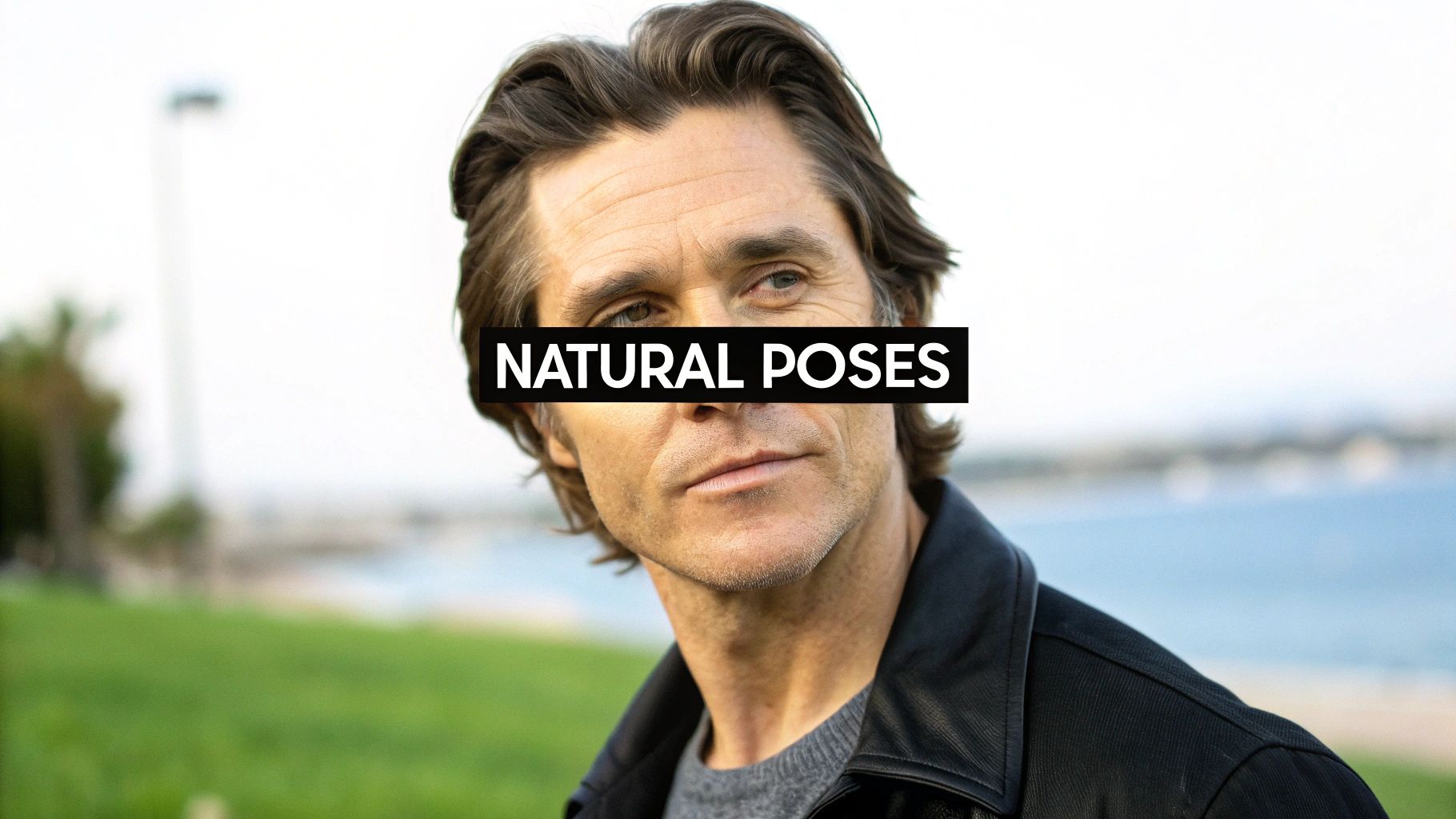
So, the prep work is finished. Your wardrobe is laid out, you and the photographer are on the same page, and now it's time for the main event: the performance. A headshot session isn’t something that just happens to you; it’s an active collaboration where your ability to connect, feel, and truly perform makes all the difference.
Think of that camera lens as your scene partner. The secret to a headshot that jumps off the page is giving that partner something real to react to.
Connecting with the Lens
Before the first click, take a moment. Ground yourself. Close your eyes and quickly cycle through the character archetypes you prepped. Here’s a practical exercise to try for different looks:
Goal: The "Empathetic Nurse" (Warm, Commercial Look)
- Action: Don't just "smile." Think of a specific, happy secret.
- Step-by-Step:
- Close your eyes and take a deep breath.
- Picture a loved one telling you wonderful news. Feel the genuine warmth spread through you.
- Let your eyes soften and a natural smile form.
- Open your eyes and look directly into the lens, sharing that feeling.
Goal: The "No-Nonsense Lawyer" (Confident, Theatrical Look)
- Action: Project focus and intelligence through an internal monologue.
- Step-by-Step:
- Straighten your posture and drop your shoulders.
- Think a specific, challenging thought like, "I know something you don't know."
- Let that thought sharpen your gaze and create a subtle tension in your expression.
- Connect with the lens as if you are about to challenge your scene partner.
From Posing to Natural Positioning
Nothing dates a headshot faster than a stiff, rigid pose. The goal is natural positioning that looks confident. Try this simple movement exercise during the shoot:
- Stand with your feet shoulder-width apart.
- Turn your body about 45 degrees away from the camera.
- Slowly shift your weight from your back foot to your front foot.
- As you shift forward, bring your head and eyes back to the lens.
- Lean in just slightly from the waist. This creates a dynamic, engaging line that draws the viewer in.
A subtle lean toward the camera is a fantastic technique. Leaning in, even just an inch or so, creates an immediate sense of engagement and confidence. It's an inviting, subconscious cue that draws the casting director right in.
The industry has moved on from static, formal portraits. Current trends in professional actor headshots are all about authenticity. You can see more examples of what's current in headshot photography trends from Zesty Orange Photo.
Managing Your Energy and Mood
A typical headshot session can last a few hours. Keeping your energy up is critical. Here’s a simple "shoot-day toolkit" to bring:
- A "Character" Playlist: Create two playlists on your phone: one upbeat for commercial looks, one atmospheric for theatrical shots. Play it between looks to reset your mood.
- Fuel and Hydration: Pack a water bottle and non-messy snacks like almonds or a protein bar. A quick snack can prevent an energy dip.
- Reset Button: Between wardrobe changes, take 60 seconds to shake out your arms and legs and do a few neck rolls. This prevents your smile from looking fake and keeps you loose.
Alright, the shoot’s wrapped. Now comes the hard part: sifting through what feels like a million photos to find the handful that will actually book you work.
It's easy to get lost in the sea of proofs. You're not just picking pretty pictures; you're selecting your most valuable marketing assets.
Every choice from here on out has to be deliberate.
Your First-Pass Filter: The 3-Question Test
Before you ask anyone for their opinion, you need to cull the herd yourself. Run every potential keeper through this quick test. If you can't say "yes" to all three, the shot is out.
- Does it look exactly like me? This is the most important rule. No exceptions. It has to be an honest reflection of how you'll look when you walk into the audition room.
- Is the expression specific and marketable? Can a casting director look at this and instantly get a character type? Think "warm and approachable," "edgy and intense," or "quirky sidekick." Vague smiles don't sell.
- Is it technically perfect? Are the eyes tack-sharp? Is the lighting professional and flattering? Any technical flaw is an easy reason for a casting director to toss your headshot.
This simple process will slash your gallery down from hundreds of options to a much more manageable group of real contenders.
Getting Feedback That Actually Helps
Now that you have your top picks, it's time for a second opinion. But be incredibly selective about who you ask. Your friends and family mean well, but they'll almost always choose the photo where you look the "nicest." Here's how to get actionable advice:
- Select Your Circle: Choose your agent, manager, and one trusted acting coach or industry peer.
- Frame the Question: Instead of asking, "Which ones do you like?" ask a specific, marketing-focused question. For example: "I'm targeting network procedurals. Which of these three theatrical shots says 'rookie detective' most clearly?"
- Gather the Data: Collect the feedback. If two out of three experts pick the same photo for a specific purpose, that's a strong indicator. The final decision is yours, but it should be informed by this professional input.
Remember, you're gathering data, not seeking approval. Conflicting advice is normal. The final decision is yours, based on which shots best align with your career goals and the types of roles you want to book.
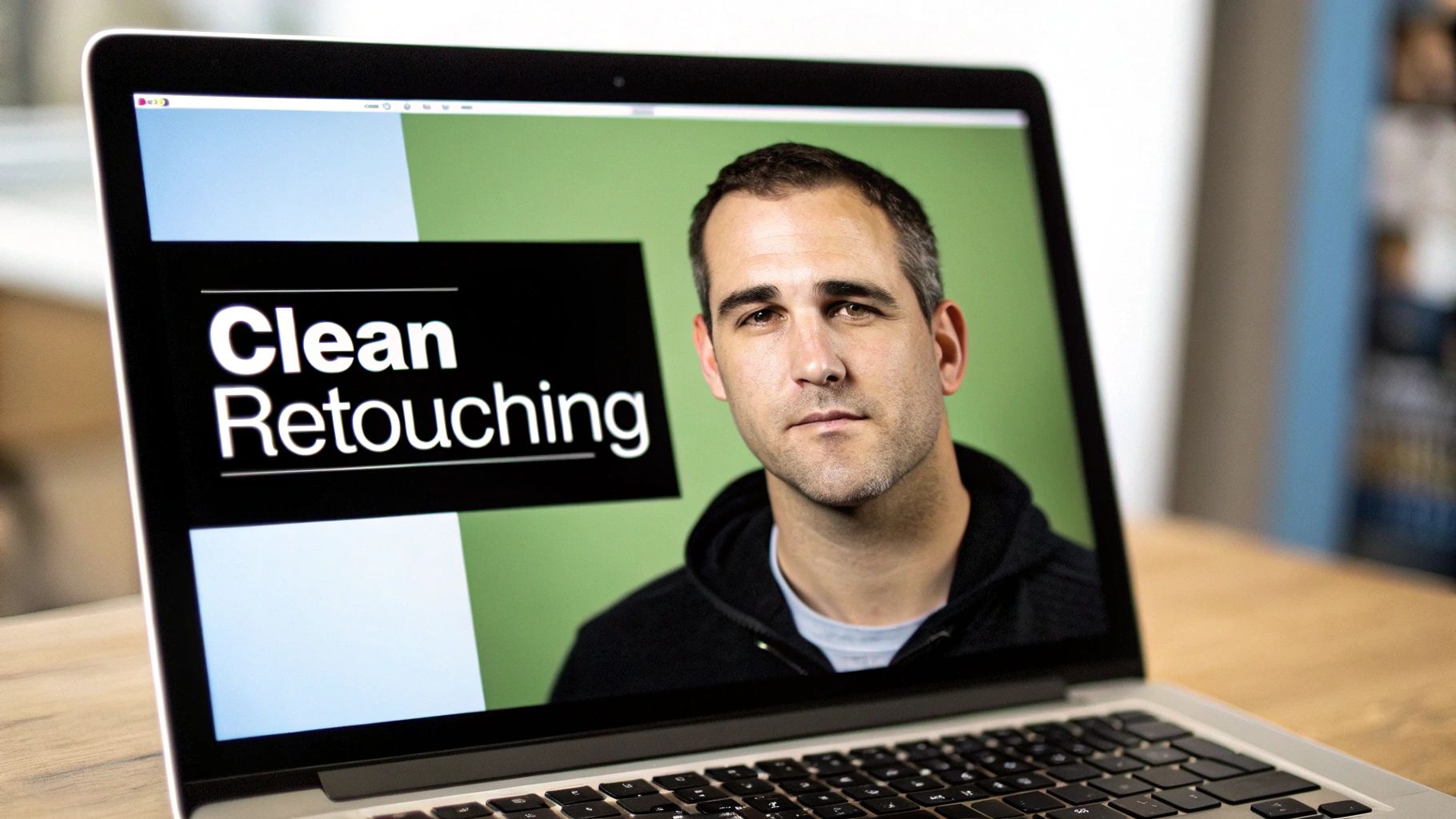
What "Retouching" Really Means
Let's be clear: retouching is a required step for professional actor headshots. The goal is enhancement, not erasure.
- What you should fix (The "Polish" List):
- Temporary Blemishes: Pimples, scratches, or shaving nicks.
- Distractions: Stray hairs across the face, lint on a shirt.
- Minor Balancing: Lightly softening under-eye shadows, slightly reducing redness in the skin.
- What you should never fix (The "Red Flag" List):
- Permanent Features: Scars, moles, or unique facial characteristics.
- Facial Structure: Changing the shape of your nose, jaw, or eyes.
- Skin Texture: Over-smoothing skin to look like plastic.
A headshot that’s been edited to death screams insecurity. To see what's possible with modern tools, check out our guide on how to get the most out of AI image enhancement. The idea is to make subtle, clean corrections that help your best self shine through, not create a different person entirely.
How to Budget for Your Headshot Investment
Let's talk money. Figuring out the costs for professional actor headshots is a crucial step in making a smart career move. This isn't just about buying some nice photos; it's a direct investment in your most important marketing tool. Let’s unpack what your money is actually buying.
Analyzing Photographer Pricing Tiers
Photographers typically structure their packages into different tiers. Here’s a practical way to compare them:
- Budget Tier (Under $300): Often includes 1-2 looks and a shorter session. Best for: Actors on a very tight budget or needing a quick update. Watch out for: Rushed sessions, inexperienced photographers, and poor lighting.
- Mid-Range Tier ($300 - $700): This is the sweet spot for most working actors. Expect: 2-4 looks, a 90-minute to 2-hour session, and an experienced photographer who knows how to direct actors.
- Premium Tier ($700+): Top-tier photographers who shoot well-known actors. Expect: Extensive coaching, multiple looks, longer sessions, and images with a proven track record of getting noticed by major casting offices. You can find a good breakdown of headshot costs and what they include to see where your budget fits.
A price that seems too good to be true usually is. Cheap headshots can do more harm than good by making you look unprofessional.
What’s Included in the Package
When you're comparing photographers, use this checklist to see what you're really getting:
- Number of 'Looks': How many different characters or outfits can you shoot? Aim for at least two: a commercial look and a theatrical one.
- Session Time: A rushed, 30-minute shoot won't produce relaxed shots. Look for sessions that last at least 90 minutes to give you time to warm up.
- Retouching: How many final images are retouched? What is the cost for extra retouches? Professional retouching is non-negotiable.
- Delivery: How do you receive the proofs and final images? Do you get high-resolution files suitable for printing?
As you plan, it's a good idea to understand the post-production side of things; our guide on building a solid photo editing workflow gives some great context here.
Key Insight: Think of your headshot budget as a direct investment in your acting career. Saving a few hundred dollars on a cheap photographer could cost you thousands in missed auditions. Find the best, most reputable photographer you can realistically afford. Their skill is what turns a simple picture into a tool that gets you in the door.
Frequently Asked Headshot Questions
Stepping into the world of professional actor headshots can feel like navigating a minefield of questions. Getting the right answers is crucial—it helps you make smart choices and sidestep common mistakes.
How Often Should I Update My Actor Headshots?
The general rule is every 1-2 years. However, you must update them immediately if any of these apply:
- You've significantly changed your hair style or color.
- You've gained or lost a noticeable amount of weight.
- You've grown or shaved significant facial hair.
- You've gotten new glasses that you now wear all the time.
- You look noticeably older than you do in your current headshot.
Casting directors expect the person who walks into the room to match the photo. An outdated headshot creates an awkward first impression.
What Is the Difference Between Commercial and Theatrical Headshots?
Understanding this difference is critical for marketing yourself. Here's a quick cheat sheet:
Commercial Headshot:
- Goal: To look friendly, trustworthy, and sell a product.
- How-to achieve it: Bright, even lighting. Vibrant colors in your wardrobe. A big, genuine smile showing teeth. Direct eye contact with the camera.
- Think: "The friendly neighbor you'd borrow sugar from."
Theatrical Headshot:
- Goal: To show character, depth, and emotional range for film/TV roles.
- How-to achieve it: More dramatic or moodier lighting. Subdued, darker clothing. A specific, internal thought-driven expression (not a big smile).
- Think: "The conflicted detective with a secret."
Any serious actor needs both in their portfolio.
The real difference comes down to intent. A commercial shot says, "You can trust me." A theatrical shot says, "I can become the character you need."
Should I Hire a Makeup Artist?
Yes, if you can swing it. A professional makeup artist specializing in headshots is a fantastic investment. They know how to apply makeup so it looks natural under studio lights, defining your features without being distracting.
If you're doing your own makeup, follow these steps:
- Start with a clean, moisturized face.
- Use a matte foundation to avoid shine under the lights.
- Even out your skin tone and cover any blemishes with concealer.
- Use a neutral-colored powder to set the makeup.
- Fill in eyebrows lightly to frame your face.
- Apply a light, neutral eyeshadow and a coat of mascara.
- Finish with a natural-toned lip balm or lipstick. The goal is enhancement, not transformation.
Is It Okay to Use AI to Create My Headshots?
I strongly advise against using AI to generate your primary actor headshots from scratch. Casting professionals need to see the real, authentic you.
AI-generated images often contain tiny inaccuracies and create a polished version of you that can't be replicated in an audition. This can immediately break trust.
While professional retouchers might use AI-powered tools for small fixes like taming stray hairs, the photo itself must be of the real you, taken by a professional photographer. A strong online presence is also vital for an actor's brand. For more on that, you might find our guide on how to increase your Instagram followers organically helpful.
Ready to explore how AI can elevate your social media content or personal artistic projects? At AI Photo HQ, you can generate high-quality images, avatars, and art in seconds. Visit AI Photo HQ today and start creating.


